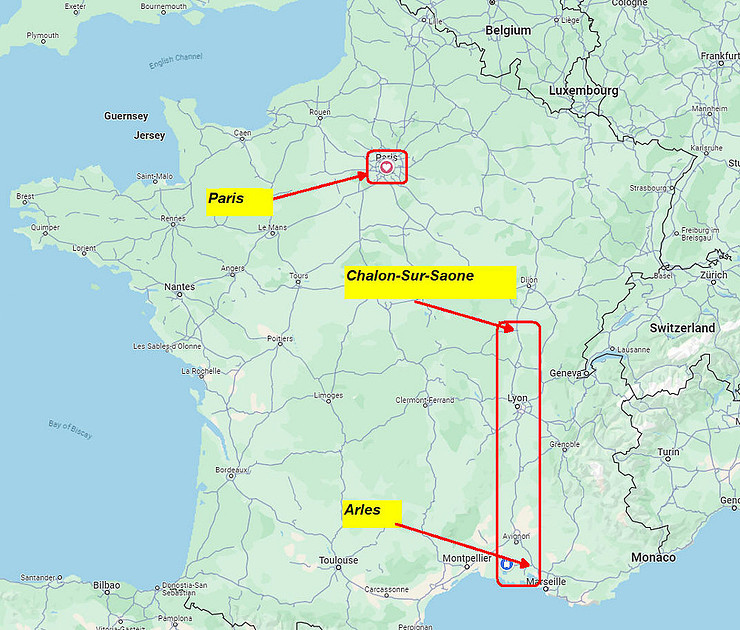
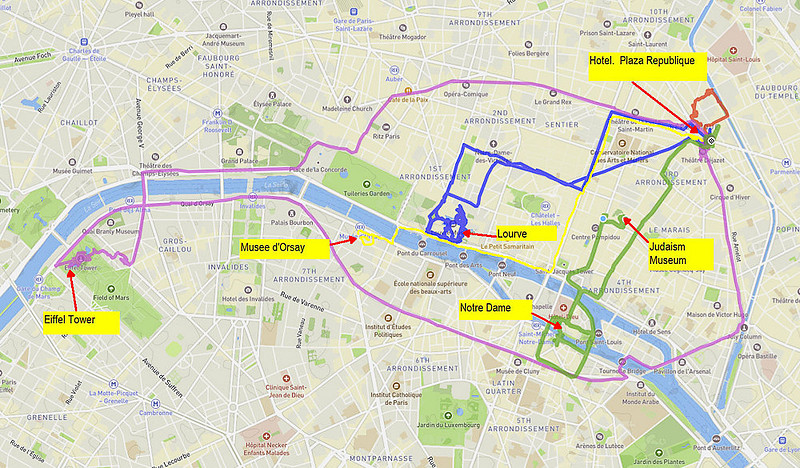
France #01 - ParisApril 2024 Trip France Trip 2024 #01 - ParisThis travel log is for a trip to France in April of 2024. This trip included a few days in Paris followed by a river cruise on the Rhone and Saone rivers through the Burgundy and Provence regions. Areas Visited map This episode covers our 5 days in Paris. The map below shows the places visited and will talk about in this article.
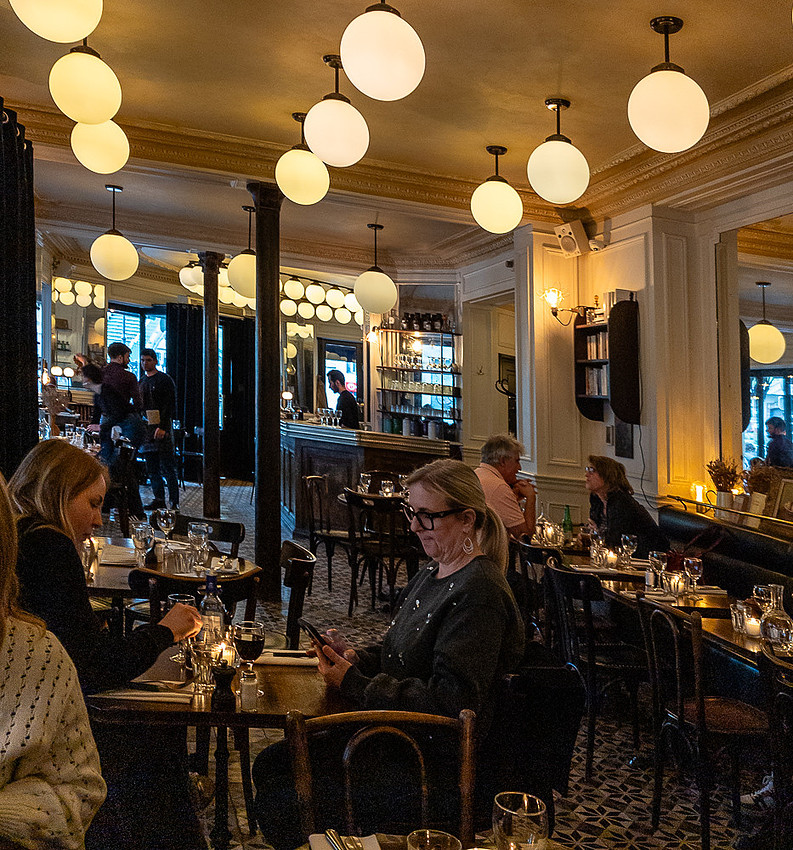
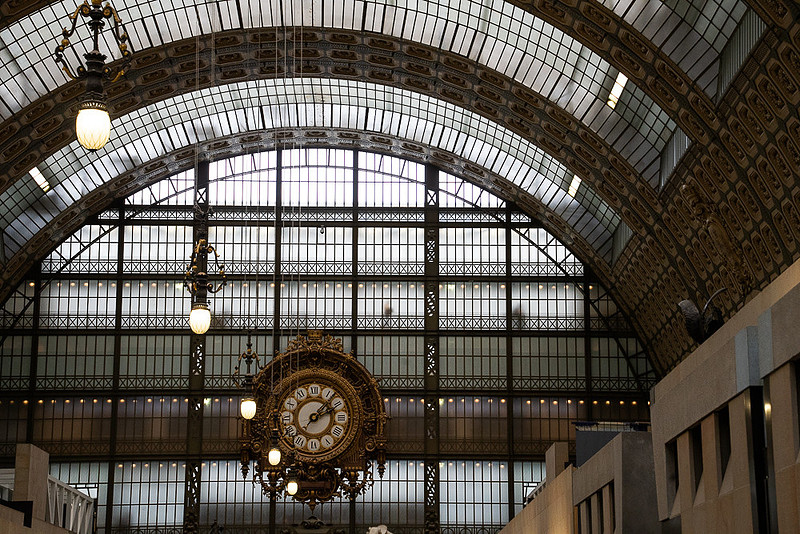
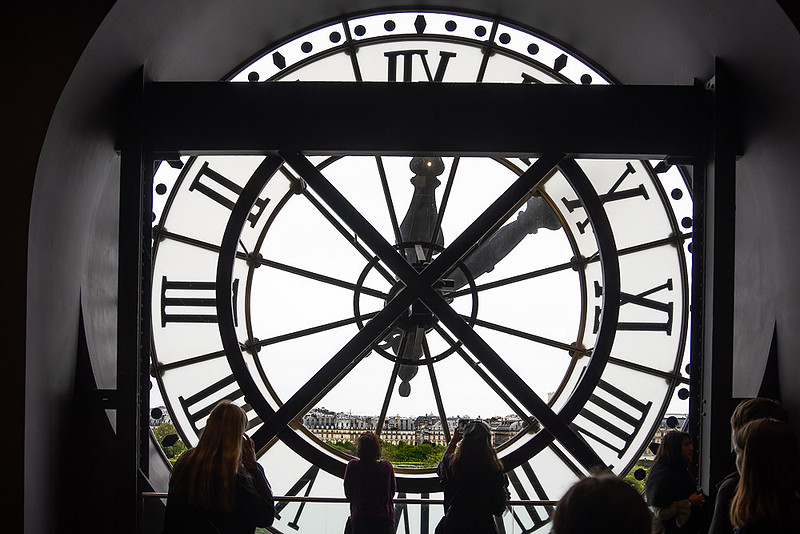
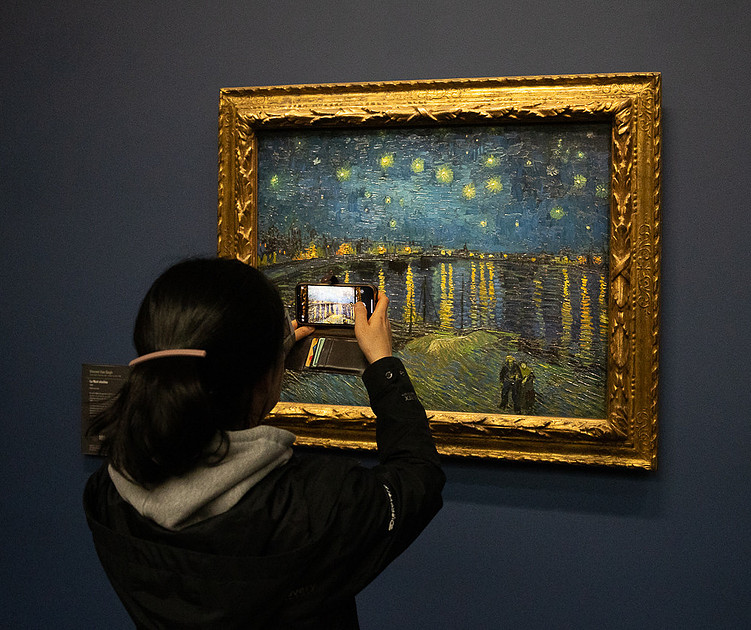
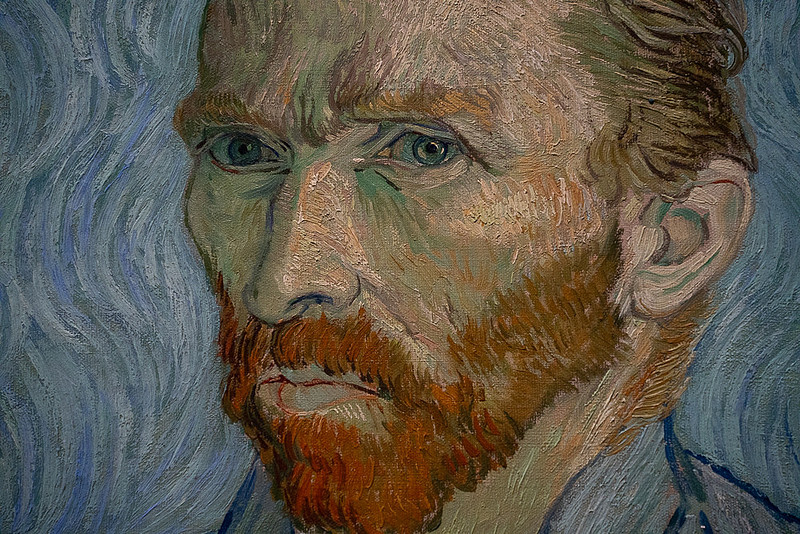
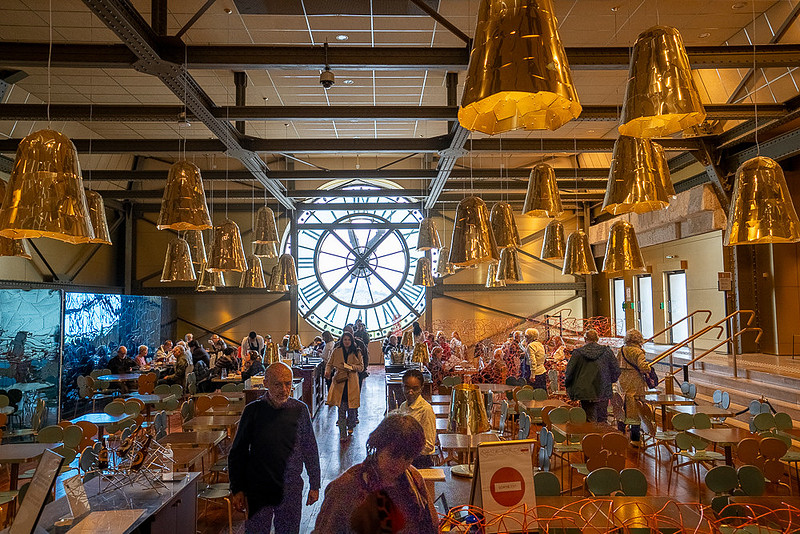
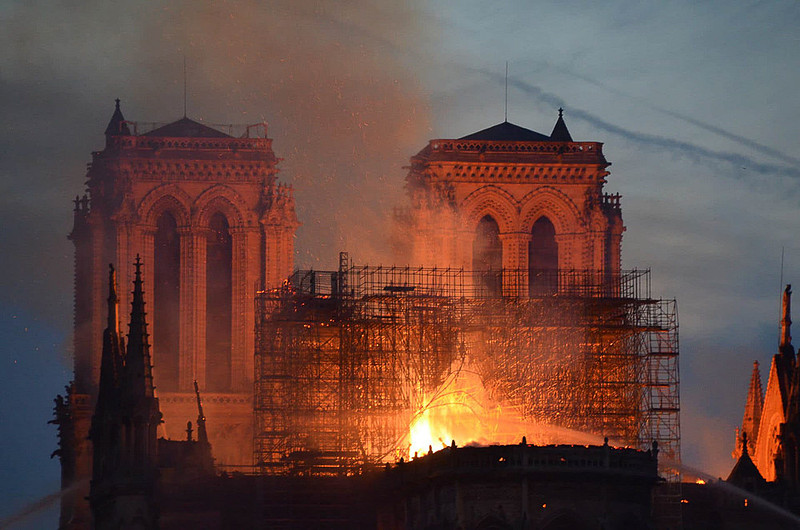
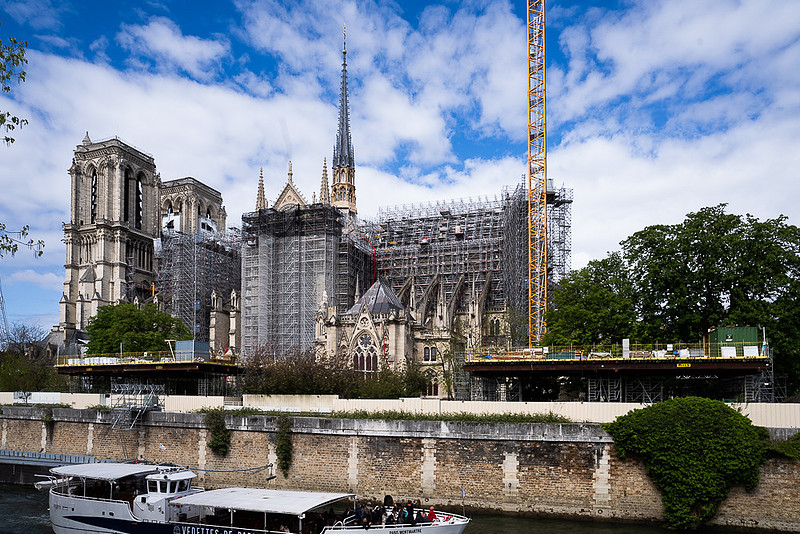
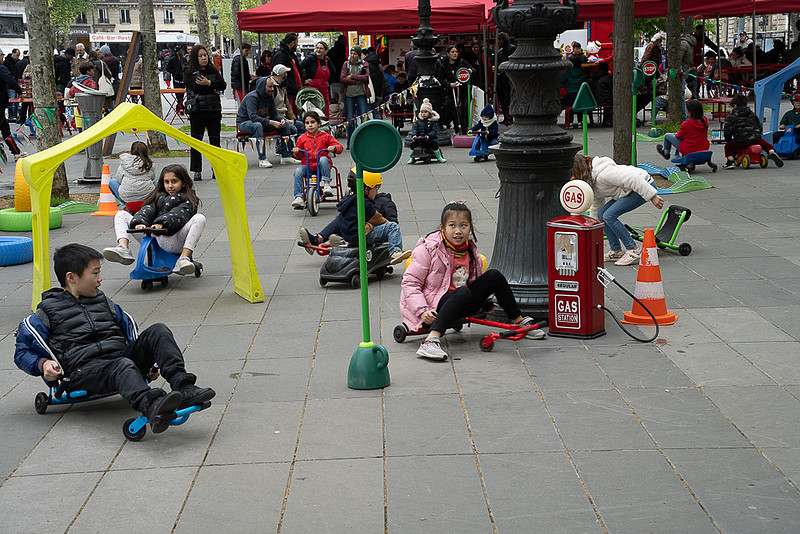
The River Cruise portion of our trip started in Chalon-Sur-Saone, which is a small town in the eastern side of southern France with no airport at all, let alone an international airport. So, with an international flight we pretty much had to land in some major city in Europe and then get ourselves to the embarkation point somehow. So, we figured we might as well spend a few days in Paris to get un-jet lagged as is our normal routine, see some sights, and then make our way down to Chalon-Sur-Saone by train. We had visited Paris once before in 2008 and had some idea of the layout of the city and the places we wanted to visit. But before I get into the sites we visited, I’ll share some planning we did the prior year for this trip. Planning for the trip Now that we’re well into retirement we try to avoid peak seasons and instead shoot for the spring and fall when the weather is many times better than in the sweltering summers, there are less crowds (so they say), and prices of hotels are a bit lower. I’m also getting less and less excited about driving or taking public transportation in foreign language countries where we’d have to deal with all the logistics involved. That’s OK domestically but not as appealing for international trips, so for international travel we tend to like formal tours rather than roll your own itineraries. And, we felt that the time had come to try and reduce the number of times we’d have to unpack and re-pack in order to change hotels every day or two as is the case with most bus tours. And thus we decided to give a boat tour a shot. Even though I marvel at the engineering and design elements of large cruise ships and would love to have a tour OF such a ship, we have no interest in actually taking a cruise ON one of them. So, we decided to see how we would fare on a commercial river cruise. It checks the unpack once box, it offers visits to multiple cities with guided shore excursions, and being on a river it wouldn’t be prone to motion related issues. However at over 100 passengers the river boats have a larger group than we prefer. We tend to like tours with around 20 to 25 guests where you can really get to know your fellow travelers. So, we were a bit apprehensive about being with 4 to 5 times as many people. But, Covid had diminished as a major concern other than in large crowds so 100 or so passengers would probably be OK in that regard. So now that we had settled on the ‘how’, we came to the ‘where’ question. We immediately rejected a river cruise in the topics as we’d already done one in Laos as part of a larger tour and after Peru, Guatemala, Vietnam, Cambodia and Laos, we were just not in the mood for more 3rd world experiences. So that ruled out most of Asia and South America leaving Europe. Although we hadn’t done any river cruises in Europe we had already visited most of the places that the main northern European river cruises go to so those dropped off the list leaving southern Europe. What we found though was that most of the France and Spain river cruises were heavily focused on wine, cheese, and high end cuisine with most of the shore excursions visiting wineries and food related attractions. As we don’t really drink, and I don’t care for cheese or for that matter high end cuisine those also fell off the list. So, we picked a Rhone-Saone river cruise that was more focused on medieval towns and villages and only offered a smattering of wineries and food related excursions. And then we came to ‘when’. Fall was out do to the wedding of a nice at some undisclosed time in October or November, so spring it would have to be. We actually were trying to get something in May but they were all sold out so we had to choose between mid summer with a high likelihood of excessive heat and possibly low water or mid April which could still have the remnants of winter. So, April it was. Reality Sets inSo, “April showers” in Paris, right? Well, yeah, that was expected. What was not expected were temperatures in the 40’s with a rip roaring wind to add to the chill factor. On some days it actually nudged into the 50’s, but that’s still pretty chilly when it comes with a good wind. And, a shower from time to time is poetic but rain every day is just plain annoying. Most of the rain was, indeed light showers or continuous drizzle but from time to time a real gully washer deluge came through which prompted us into some café for a lunch or snack that we stretched out till the rain stopped. On the morning we went to the Eiffel Tower it was so cold and windy that while waiting for the travel agency office to open where we were to meet our tour we found refuge in the only store that was open at that time (9:30 on a Sunday morning). It happened to be a tourist oriented shop for sundries and trinkets. Fortunately they had some very capable heaters running full blast where we could defrost. And, conveniently enough, they sold nice warm gloves which in our infinite wisdom we didn’t think we’d need so hadn’t packed. So, we bought a couple of pair to go along with the multiple layers of jackets, fleece, and flannel that we were wearing. Even though this weather pattern persisted throughout our entire trip, the temperatures abated a bit for our week on the cruise. Not sure if the weather actually got warmer or we were just further south but either way, it was tolerably warmer (most of the time) but that pesky intermittent rain was constantly getting at us as we walked around of our tours of cities and countryside. On the bright side though, clouds make for better images. However, cold and rain is not conducive to lounging on a chaise lounge on the upper deck and watching the scenery go by. Home BaseNot withstanding the expected unorganized chaos of CDG (Charles De Gaulle Airport) our flight from San Francisco to France was long but uneventful as was the jet lagged cab ride from the airport to our hotel. We stayed at the Crowne Plaza on the Place de la Requblique which is 0.4 miles NE of the Seine and Notre Dame. Far enough away to escape outrageous prices but too far for us to walk to the main attractions. There was a subway station right in front of the hotel but not being young and energetic anymore, we opted for Taxi travel. Speaking of Taxis, when grabbing a cab on the street, it turns out that some of them do not take credit/debit cards (most do) so if that matters to you, ask before you get in. Even if you see the card reader sitting on the front seat, it’s good to ask. We had one cab ride where the card reader was sitting right there but at the end of the ride the driver insisted on cash. We arrived at our hotel from the airport in early afternoon and after a nap and a chat with the concierge we walked down to “the canal” for a suggested restaurant – which was right were they said it would be. Always a nice touch. Although it was probably a commercial canal at one time, it now seems to be more of a long skinny reflecting pool. In some blocks they narrowed the water channel to almost nothing in order to put in a wide walkway (and skinny park) between the water and the road. In other places they made the whole thing a park with no canal at all. Canal Saint Martin Café’s in Paris are quite similar to inner city establishments in New York or San Francisco, just with much smaller tables. We found that they all take credit cards – even the tiniest ones that are not much bigger than a large closet. And most have some sort of a bar in the middle. La Marine Restaurant (by “the Canal”) On our way back to the hotel, we noticed some sort of brouhaha going on in the plaza in front of our hotel. Turns out it was a food giveaway and allocation point for homeless shelter beds. Our room on the 2nd floor overlooked the plaza which allowed us to keep tabs on the events in the plaza. This event broke up around 8:00 after all those in line had been given food and “tickets” to various homeless shelters. Musee d’OrsayLike most major attractions in Paris, unless you love waiting in long lines it is best to pre purchase timed entrance tickets. When you arrive there is usually either a very short line or none at all for holders of such tickets compared with a long line for non ticket holders. The Musée d'Orsay is on the Left Bank of the Seine and is housed in the former Gare d'Orsay train station. It was built for the 1900 exposition (same one that the Eiffel Tower was built for) and was the first ever electrified urban terminal station. For the next 30 years, along with its adjoining posh hotel, it was the mainstay of intercity travel for both business and pleasure. This lasted into the 1930’s when newer longer intercity trains could no longer be accommodated on the shorter Gare d’Orsay platforms and there was no place to expand. So the intercity traffic migrated to other stations. After WWII, it continued to be used for local suburban commuter trains for a bit of time but these too changed over to other stations with better connections to local buses and subways (when the last trains stopped coming is unclear). The posh hotel closed in 1973. Still retains much of it’s “train station” architecture Between its demise as a train station and the opening of the museum at the end of 1986 it had several uses. During WWII it was a prisoner of war mail center and then in 1945 was used as a reception center for released French prisoners of war. After the war the grand and somewhat empty space of the Gare d'Orsay Station was used in several films including Orson Welles' adaptation of Franz Kafka's "The Trial" (1962) and Bernardo Bertolucci's "The Conformist" (1970). Another notable use of the building was in 1958 when General Charles de Gaulle used the opulent hotel ballroom for a press conference announcing his return to national politics, marking a turning point in French politics. One of two outward facing clocks left over from the train station As far as it becoming a museum, planning started around 1970 and after extensive remodeling it finally opened to the public in 1986. The museum is known for its French art dating from 1848 to 1914, including paintings, sculptures, furniture, and photography. It is one of the largest art museums in Europe and houses the largest collection of Impressionist and post-Impressionist masterpieces in the world with work by painters such as Claude Monet, Édouard Manet, Edgar Degas, Pierre-Auguste Renoir, Paul Cézanne, Paul Gauguin, and Vincent van Gogh. Many of these works were held at the Galerie Nationale du Jeu de Paume prior to the museum's opening When visiting, be prepared for crowds, especially around the most famous paintings by Van Gogh and Monet. The most popular way of enjoying fine art these days. Vincent Van Gogh Self Portrait Like most major museums in Paris, this one too has a café and a restaurant. In fact you have to walk through the café to get to where most of the paintings are exhibited. The Restaurant is on a lower level. Café d’Orsay with the other clock It is well known that the busiest time for tourists to visit Paris is in the spring and summer, with the 2024 Summer Olympics (July 26 through August 11) expected to bring 15 million people to the city just on its own. One would expect that most of those Olympics fans will also be interested in seeing what Paris has to offer as long as they in town. And, here we have a prime example of exquisite foresight and planning. The restaurant is closed for renovation from June 10th to September 30th. After all, why would they think that the peak tourist season with 15 million people arriving for the Olympics would not be the best time to close the already overcrowded restaurant for renovations? Jewish MuseumThe next day we taxied (is that a word?) over to the Museum of the Art and History of Judaism also known by its initials MAHJ. It is located on a quiet narrow residential street off the beaten path in the Marais district. Even though it is tiny when compared to Musee d’Orsay and the Louvre it is the largest museum in France dedicated to Jewish art and history. It was founded relatively recently in 1998 in the old Hôtel de Saint-Aignan, a beautiful 17th-century mansion. Their collection numbers around 12,000 objects of which around 600 can be displayed at one time. It offers a comprehensive look at Judaism in Europe and the Mediterranean basin, spanning from antiquity to the present day. Knocker on the front gate to the museum The Statue of Captain Dreyfus by Tim Louis (Lejzor) Mitelberg Notre Dame de ParisAlthough Cathedral Notre Dame was (and still is) closed to the public due to a significant fire in April 2019 one can still stroll around the perimeter of the construction zone. On the perimeter fence they have placed a series of quite interesting billboard size signs that describe the day of the fire and provide all sorts of interesting factoids about the reconstruction effort. For those of you who were visiting another planet 5 years ago in April 2019. a major fire broke out in the rafters of the cathedral, most likely related to some restoration work that was underway at the time. The fire destroyed the cathedral’s ancient timber roof structure and caused its spire, rebuilt in 1859, to collapse. Most of the roof structure and roofing material fell onto the top of the vaulted stone ceiling that you see the underside of when inside the cathedral. That it could hold up under that amount of weight is a testament to the medieval builders who constructed it. However, the collapsing spire and other heavy items did penetrate the ceiling in several places leaving large holes. These holes in the ceilings allowed a lot of debris to fall all the way to the floor. This included molten lead from the roof sheeting which had melted due to the heat of the fire. In addition there was significant water and smoke damage throughout the structure. In other words, it was a real toxic mess. But miraculously the massive stained glass windows, while soot covered, where not really damaged. 2019 fire The $767 million repair is nearing completion and is expected to be done by the end of 2024, sadly not in time for the Olympics even though that had been an initial goal. But not to worry, $928 million was raised in donations (I guess the Catholic Church doesn’t have any money to spend on such things). Those donations came from 340,000 donors in 150 countries. The reconstruction is being done to be as close as possible to the original construction. Many times the crafts-people use the same types of tools originally used and follow drawings and diagrams created over the years, including many from the restoration project that was underway when the fire erupted. In the plaza in front of the Cathedral, they have erected some bleachers facing the relatively unscathed front of the building. As almost every tour of Paris makes a stop here, these bleachers are usually full of tour groups listening to their guide explain what they are looking at in all sorts of different languages. Closer to the building are fences with some of those informational billboards I mentioned earlier. Plaza in front of Notre Dame Paris You can circumnavigate the Cathedral on foot along the outside of the construction fence except for one area where you have to cross the river to a street on the other side. Other than the front as shown above, pretty much the entire rest of the building was still completely covered with scaffolding. Scaffolding covers all the core structure except the front twin towers which were not really damaged After Notre Dame, we went back to our hotel for a bit of a rest before dinner. On this day, the plaza in front of the hotel was hosting a kids ‘auto-mania’ (for lack of a better word). Apparently the city or some charitable organization takes over several hundred square feet of paving and sets up a kid size automotive zone including a gas station a store and wooden road signs. They also provide (free of charge) a whole range of foot powered vehicles for the kids to race around in and play “driver”. It was really quite cute even though kids at that age having so much fun can be quite loud. Most likely imitating the vocalizations they hear from their parents while being driven around Paris on various errands. Of course since we don’t speak French it was all just happy noise to our ears. Kids auto-mania in the plaza outside our hotel Eiffel TowerThe following day we had tickets for the Eiffel tower in the morning. I already told you about the weather and the what-not shop where we got gloves so won’t go into that again. The Eiffel tower, is arguably the worlds most recognizable landmark (or at least in the top 3). It was built for the worlds faire of 1900. The design was initially criticized by some top artists and intellectuals for its “terrible aesthetics” such as ‘Paris does not need its skyline marred by a skeleton’, and a letter signed by several prominent artists that in part read that the tower would be “a gigantic black factory chimney, its barbarous mass overwhelming and humiliating all our monuments and belittling our works of architecture, which will just disappear before this stupefying folly.” But construction went ahead anyway from 1897 through 1889. As it turned out, Mr. Eiffel didn’t even design it. That was done by Maurice Koechlin and Emile Nouguier, two engineers who worked for his company. The construction was only approved because it was to be a temporary structure which would be taken down after 20 years. However, Eiffel cleverly put a radio antenna and wireless telegraph transmitter in the tower. After proving radio’s usefulness to the government in 1910, Eiffel was granted a 70-year extension to his lease. By 1980, of course, the tower had become an indelible symbol of both Paris and France, and it was in no danger of demolition. But, it almost met its demise in WWII. In August of 1944, the Nazis were losing control of occupied Paris, and Adolf Hitler commanded his generals to level the city. Plans were drawn up to mine the Eiffel Tower with explosives. Thankfully, Allied troops swooped in before the order could be carried out. Subsequent air raids over Paris caused significant damage, but the Eiffel Tower survived the war. The massive iron structure is wind resistant and will sway during a storm. But wind isn't the only thing that makes the enormous tower move, The expansion due to the heat of summer causes it to get taller in the summer and shorter in the winter, It will also lean an average of six inches away from the sun, as the side facing the direct light heats up faster than the other three sides Other than the plaza at ground level there are 3 levels (they call “floors”) one can go to in the tower itself, the first level (or floor), the second, and the summit.
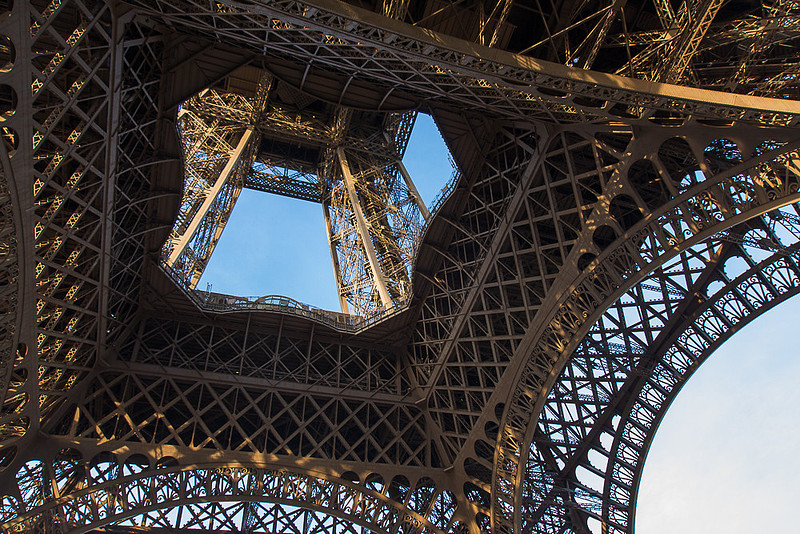
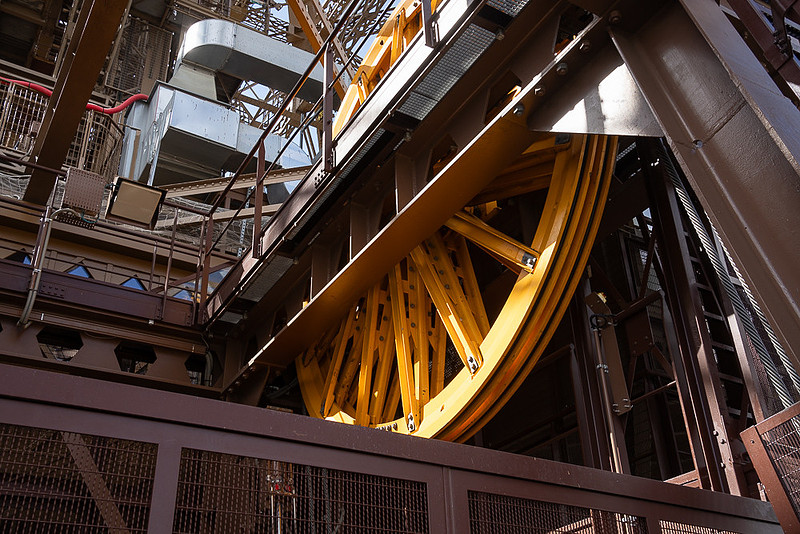
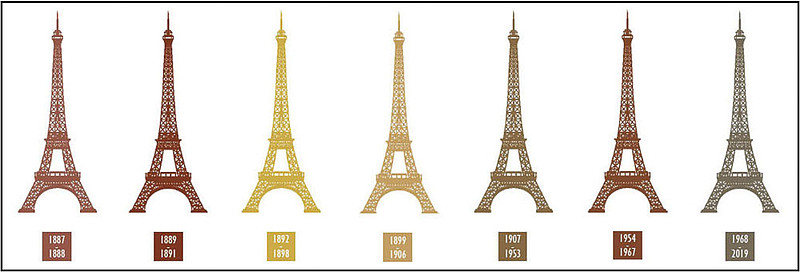
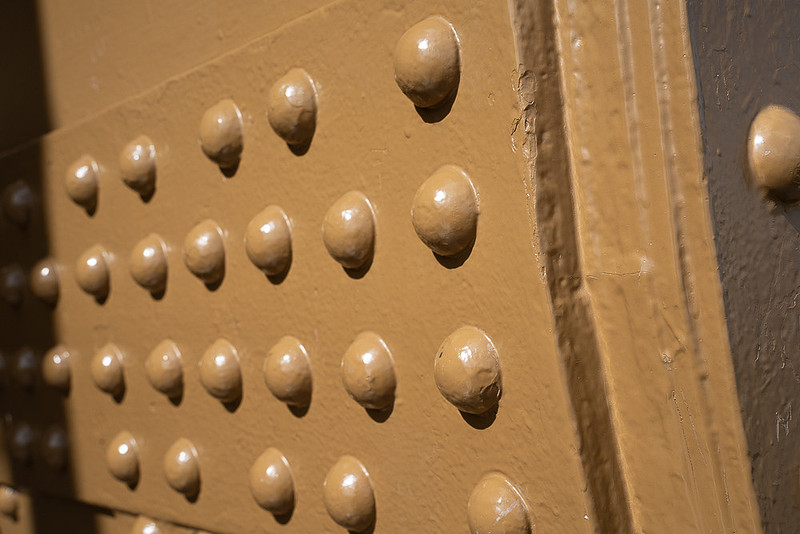
Bottom up If you want to go up into the tower itself there are two options. You can get in line and pay for an elevator ride up to the 2nd level or you can climb the stairs which are 674 steps – all going up. The 2nd level is actually a two story platform with an inside section that is heated and is out of the wind and an outdoor perimeter where you can get right up to the edge on all sides. Inside are small souvenir shops and snack counters and apparently a restaurant which I didn’t see. If you want to go higher you have to pay more and take a different elevator to the summit platform – they don’t allow you to take the stairs as too many people were, let’s say, blown off their feet while ascending the steps in the olden days. Inside Out. We previously visited the Eiffel Tower in 2008. Even though that was 6 years after 911, one could just walk up to the base of the tower and wander around. But, things are a bit different now. The entire area around the tower is surrounded by a security fence about 100 yards away from the base of the tower where you get in line to go through a TSA style security check. This gives you access to the plaza at the base of the tower. Assuming you want to take the elevator (excuse me, the lift) up to level 2, you get into another long line to get your tickets. As I recall there was another TSA style security check there as well. Now, you get to proceed to the lift where, guess what? Another security check (just a rummage through your backpack this time) after which you can board the elevator. In 2008 the lines were too long for the lift and we were not ready to ascend 34 odd stories to get to the 2nd level using the stairs so we stayed on the ground. This time we booked a tour of the Tower we found on the Internet. We met the tour at a travel agency office a couple of blocks from the park on which the tower sits. The guide then led us through the security check points (providing little useful information along the way), got our lift tickets and took us up to the 2nd level at which point he collected tips and departed. Some people in our group had signed up for tickets to the top but other than being handed their lift tickets and being told the lifts for tht op were on the upper level of floor 2, they were not accompanied by the guide. Elevator cable wheel The view from the 2nd level was wonderful and among other things we could see several temporary stadiums nearby being built for the Olympics. But it was freezing cold out there with gale force winds making it not quite as pleasurable an experience as it might have been. Even with our new gloves, it was too cold to stay out there more than 5 or 10 minutes. But I got some shots and marveled at the architecture. Champ de Mars Arena. Temporary stadium for judo, wrestling and beach volleyball events doe the 2024 Olympics Looking up from the2nd to the summit level. Painting the Eiffel Tower At the time of our visit the tower was being re-painted in honor of the upcoming summer Olympics. Since it was built, the Eiffel tower has had 7 different color schemes. Each color scheme is made up of three different tones, darker at the base and lighter towards the top to create a visual impression of uniformity.
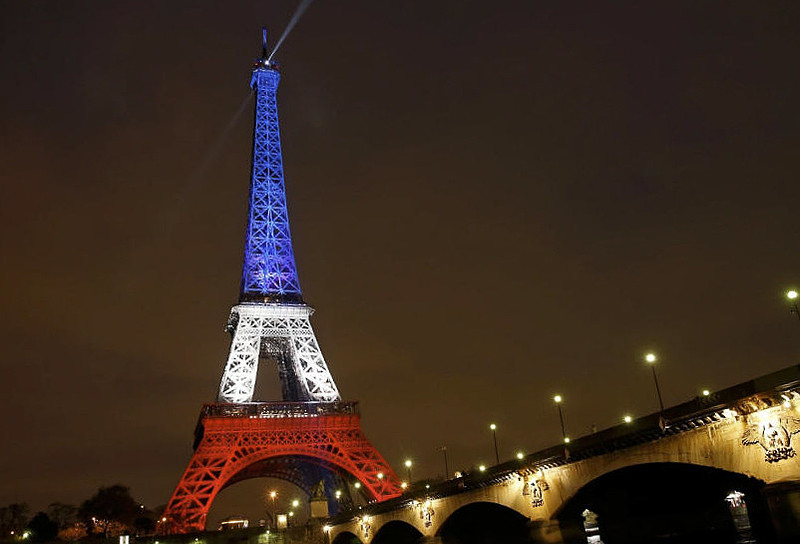
Sporting it’s 2024 color scheme, And. no – it was never red, white and blue as some swear it was at one time. However, in November of 2015, the tower was illuminated in blue, white and red, the colors of the French flag. This was to pay tribute to the victims of a series of deadly attacks in the French capital.
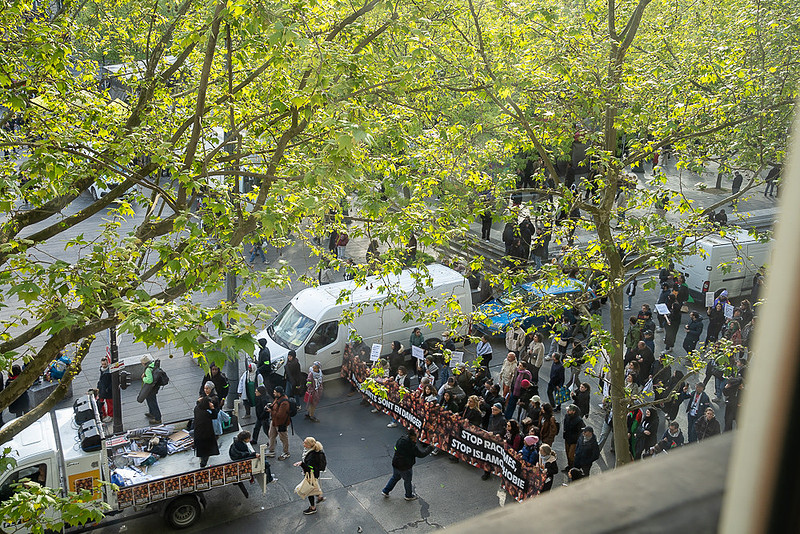
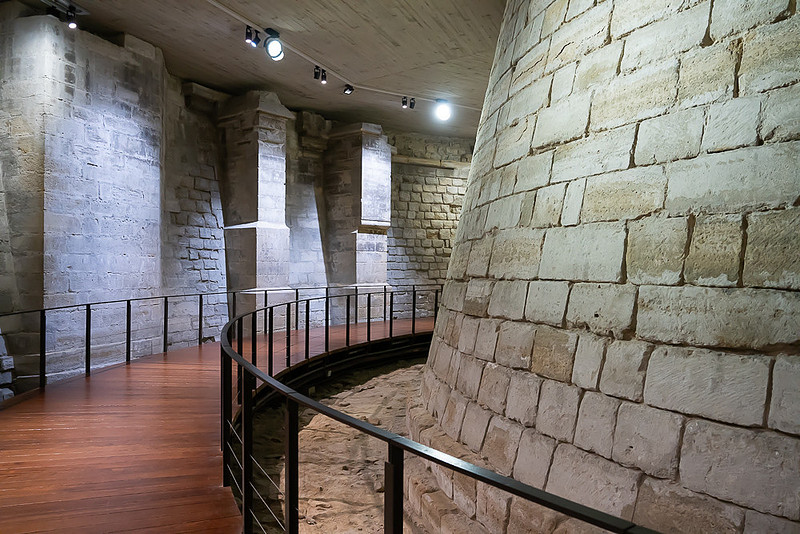
Flea Market and Demonstration on the Plaza After the Eiffel Tower we headed back to the hotel to get off our feet for a bit, to find some lunch and to pick up a few things at a local store. The concierge directed us to a large supermarket-drug store establishment which would have what we needed. It was across the other side of the plaza and then a few blocks down a major boulevard. On this Sunday the plaza had morphed into a massive flea market so we decided to walk through the plaza. Just like in the US there were booths selling small appliances (newly stolen?), clothing, and other new items but mostly it was used items like dishes, lamps, silverware, books, vases and old hardware. Pretty much just junk but even so sales were brisk. We then crossed a major boulevard on the far side of the plaza to head down to the store. Not unusual but I noticed a couple of policemen standing by a shop having a conversation. Nothing unusual about that except for the assault rifle each was carrying. Not used to that but, perhaps that’s SOP in Paris. Just a bit further down the street was the cop car that they evidently came in. But, it was full of other cops. Wait a minute, there was another cop car full of cops right behind the first one. Holy cow, the entire block, as well as the next block, was lined with a variety of police cars, troop transport vehicles, riot trucks with water canons on the roof, and police trucks apparently loaded with tactical gear. I lost count at 47 such vehicles. What the heck is going on? So, I couldn’t help myself but to ask one of the officers (who was also in full riot gear and similarly armed) what was going on. Turns out there was a pro Palestinian, anti Gaza War, march headed to the Plaza of the Republic outside our hotel where they planned to have a demonstration and rally later that day. After our shopping we went back to the street bordering the plaza for a bite of mid afternoon lunch and while at the restaurant watched the world go by. The Flea Market was winding down and folks had started dismantling their booths and wheeling their unsold merchandise to vehicles parked down various side streets. From time to time a convoy of police vehicles – may 10 to 20 at a time – raced by going one way or the other. We overheard other English speaking diners near us in the restaurant say that they had also seen massive numbers of cops and cop vehicles staged along other side streets leading to the plaza. At that point I realized that the very busy boulevard along the side of the plaza in front of the restaurant had no traffic at all. It was completely empty of vehicles. The traffic lights were still going green to yellow to red and then back to green but there were no cars on the street to pay any attention. So, after paying our tab, we scurried back to our hotel – circumventing the plaza this time rather than going through it. Once back in our room overlooking the plaza the march came up the street on our side of the plaza. and ended right in front of our room. The march was led by a small flatbed truck with a PA system aimed at the marchers following along which was festooned with posters and filled with stacks of fliers being handed out to those on the sidelines watching the parade go by. The protest Marh ends right in front of our hotel room By the time the march got to our hotel most of the protestors had filtered off into the plaza where a stage and PA system had been set up. It wasn’t long before the speeches started. All in French of course but liberally sprinkled with words we knew such as Palestine, Gaza, Netanyahu, and Israel . Even though it was all in French, it was pretty easy to figure out what was being said. Between speeches they brought musical bands onstage and there was literally dancing in the street – more like a music festival than a protest demonstration. But, then back to more speeches while the next band set up their equipment. It was hard to tell if this was a regular Sunday concert series that a protest had latched onto, or a protest that included a bunch of music. There were a few cops milling around the perimeter of the crowd but not all that many. I guess those parked along the side streets were waiting there ‘just in case’. Actually the whole thing was quite civilized and not crazy as we many times see in the US media. No riot. No looting. No breaking store windows. Just several thousand people listening to speeches and enjoying music from several different bands. Not wanting to get mixed up in whatever this might turn into after dark we opted to have dinner in the hotel that night, watched a bit of TV and found that this was just one of several such protests taking place all over the city. On about 10:00 PM it was still going strong and there was no way one could go to sleep with loud pounding rock music just outside the window (which had to be left open as the hotel had yet to activate the AC for the summer and otherwise the room would be quite warm and stuffy). We called down to the front desk to see if they had any info on how late this would go on. He didn’t know but said he’d call us back. About 5 minutes later he called back after walking out front and asking a cop the same question. Turns out it was scheduled to break up at 11:00. And just like clockwork, the noise stopped right at 11:00 and all was quiet. Quiet, that is until around 5:00 am when the street cleaning trucks came through. By the time we left the hotel around 9:00 AM, everything had been cleaned up. The entire plaza was devoid of trash and liter, all the trash receptacles had been emptied, and the plaza as well as the surrounding streets and sidewalks had all been washed. The LouvreOn our last full day before making our way down to Chalon-Sur-Saone for our river cruise we visited the Louvre museum (Musée du Louvre). As mentioned earlier we had pre purchased entry tickets but also due to mobility issues were able to enter via a handicapped entrance which has an elevator from the plaza to the main lobby below the plaza. This is arguably the most famous (or at least in the top 3) museums in the world and contains some of the most famous works of Western art, including the Mona Lisa, Venus de Milo, and Winged Victory of Samothrace. The museum itself is housed in the Louvre Palace which was originally built in the late 12th to 13th century under Philip II. It was built over the old Medieval Louvre fortress, remnants of which are visible in the basement of the museum. Foundation for a round towe of the old fortress The collection spans work from ancient civilizations to the mid-19th century and contains 500,000 objects (of which 35,000 are on display) and these are divided among eight departments.
This is the world's most-visited museum at around 10 million per year (2018) and if you visit, this fact becomes quite obvious as all 10 million seem to be there the day you visit. I don’t know if the museum is big to accommodate that many visitors or they have that many visitors as it is so large. Either way, there is 782,910 square feet of exhibit space. This is approximately 18 acres which is tiny in regard to a farm but is quite a lot in regards to walking it, no matter how fit you are. But your step count app will be very happy if you try. In other words this place is gigantic and way too big to cover in single day and maybe not even in 2 or 3 days if you like to stop and read the signs and no matter how many days you plan to visit, go early as it just gets more and more crowded as the day goes on. We limited our visit to just a few of the departments (or sections). However to get from one to another sometimes we passed by or through other sections. In fact in one of those cases, we had to pass through the room with the Mona Lisa which was absolutely filled to the brim with people shoulder to shoulder all trying to get a cell phone photo over the heads of the crowd. From the Egyptian section Opulence at its best After a weary day walking the Louvre we headed back to the hotel for some greatly needed R&R. On this day the kids Auto-mania was back again. It seems that every day this plaza is used for some sort of event which is a good thing. Tomorrow we are off to navigate the French railroad system as we make our way to Chalon-Sur-Saone to meet our cruise. ====================================
PLEASE LEAVE COMMENTS ON MY WEBSITE AS I ENJOY HEARING WHAT YOU THING ABOUT WHAT I'VE WRITTEN This blog is posted here where you can also leave comments: https://www.danhartfordphoto.com/blog/2024/7/France-01 Or, the whole 2024 France trip series here (as they are created) https://www.danhartfordphoto.com/blog/keyword?k=dantravelblogfrance2024 Check my travel blogs for other trips here: https://www.danhartfordphoto.com/travel-blogs
Thanks for reading – Dan
(Images by Dan Hartford.--Info from Wikipedia, ChatGPT, other web sources, pamphlets gathered at various locations along the way guidebooks and commentary by the local guides)
Keywords:
blog,
Canal Saint Martin,
dan hartford photo,
dantravelblog,
dantravelblogFrance2024,
Eiffel tower,
France,
Gare d'Orsay,
Louvre,
MAHJ,
Musee d'Orsay,
Musée du Louvre,
Museum of the Art and History of Judaism,
Notre Dame,
Notre Dame de Paris,
Paris,
Paris France,
Place de la Requblique
Comments
Bruce McGurk & Jan Cushman(non-registered)
Thanks, Dan, for the great photos and info. We've been to Paris twice, and many of the areas you visited were familiar. I've always wanted to return to Musee D'Orsay - it was so impressive. Just say a show on Notre Dam with video of interior and new tower - they are coming right along, thankfully. The drizzle and cold sound annoying, but you got some lovely photos with blue sky!
We love river boat touring, and have done the Rhone as well as the Ohio/Mississippi. The Rhone was way more interesting. Your cruise ends at the South Coast, and fabulous place.
No comments posted.
Loading...
|